
Missing information?
Do you have any additional information you would like to share about a soldier?
Submit- Full
name
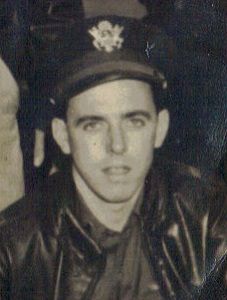
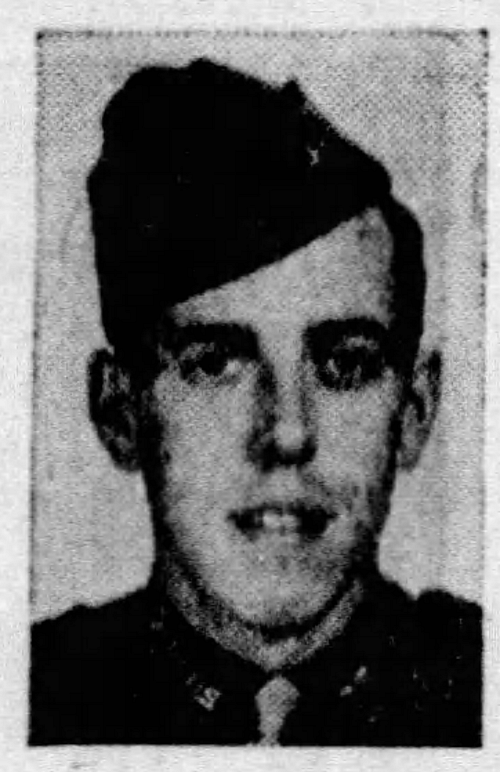
MC ANDREWS, William F "Bill" - Date of
birth
1919 -
Age
unknown -
Place of birth
Illinois -
Hometown
Chicago, Cook County, Illinois
Personal info
Military service
- Service
number
O-685664 -
Rank
Second Lieutenant -
Function
Navigator -
Unit
410th Bombardment Squadron,
94th Bombardment Group, Heavy
-
Awards
Purple Heart,
Air Medal
Death
-
Status
Killed in Action - Date of
death
4 January 1944 - Place of
death
North Sea, about 5 miles from Heligoland, Germany
Grave
-
Cemetery
American War Cemetery Ardennes
| Plot | Row | Grave |
|---|---|---|
| A | 29 | 18 |
Immediate family
-
Members
George J. Mc Andrews (father)
Marion B. Mc Andrews (mother)
Betsy J. Mc Andrews (sister)
George J. Mc Andrews (brother)
Plane data
- Serial
number
42-30162 -
Data
Type: B-17F
Nickname: The Piccadilly Virgin
Destination: Kiel, Germany
Mission: Bombing of the port
MACR: 1756
More information
2nd Lt William Mc Andrews attended college and was a bookkeeper.He joined the air Corps of the U.S. Army Reserve 19 June 1942 in Chicago, Illinois.
The airplane was shot down by fighters. It ditched in the North Sea. Ten crew members were killed, one was taken prisoner.
Statement from Sgt Melvin Seldin: "My position on that ship was as a photographer, which meant that I was the eleventh man on that aircraft. For this reason, I cannot fill in the personal questionnaire which you sent to me, but I will give you a detailed account of the incidents which occurred that faithful mission. We successfully bombed our target and saw no flak on the way home, number two propeller started to run away. According the conversation which I heard over the interphone, the pilot said that the propeller was going to break down and that he couldn’t control it. We then asked the navigator how long it would take to reach Scotland, and the navigator replied that we were ten minutes from the German coast and forty minutes from Scotland. Our altitude was still twenty-five thousand feet, but we were losing speed. The pilot then decided to turn the airplane back to Germany and either make Sweden, reach land or ditch. As it happened we turned back and lost altitude as fact that we were forced to ditch in the North Sea about five miles from Heliogoland. All seven enlisted men plus one officer were in the radio-room as we decended for ditching. The pilot, who had to control the aircraft, the bombardier and the navigator didn’t come into the radio-room. I believe that the propeller must have come loose and taken the nose of the plane with it, possibly killing the navigator and the bombardier. I arrived at the conclusion, because of the way the plane dipped down now. Just as soon as we struck the water, I tried to release the rubber boats with the mechanical release in the radio-room, however neither of them opened. All eight of us who left he airplane had use our mae-west as a result. I was the last man to leave the airplane and had to jump off from the tail of the aircraft as it went from under me. That’s how long it stayed afloat. While I was in the water I looked about me and saw that all of the men were apparently all right. In the distance I could see Heliogoland, so I swam until I was picked up by a German patrol boat. Only one of the other men swam with me. However he was separated from me in a hail storm which came up towards the evening. Given that I haven’t heard or seen anything about these men as I presumed that they perished in that storm. At my request a search was made by the German boat, which picked me up, for the other survivors of the aircraft. That is all of the information that I know concerning that mission. I hope it’s sufficient. Yours sincerly, Melvin Seldin"


Source of information: Raf Dyckmans, Peter Schouteten, André Koch, www.wwiimemorial.com, www.archives.gov, www.fold3.com MACR, www.ancestry.com 1930 Census
Photo source: Peter Schouteten, Bill Dahnke, Chicago Tribune - 8 August 1943