
Missing information?
Do you have any additional information you would like to share about a soldier?
Submit- Full
name
SHERE, Fred C Jr - Date of
birth
24 April 1921 -
Age
23 -
Place of birth
Manhattan, New York County, New York City, New York -
Hometown
Ashland, Jackson County, Oregon
Personal info
Military service
- Service
number
O-745956 -
Rank
Second Lieutenant -
Function
Pilot -
Unit
577th Bombardment Squadron,
392nd Bombardment Group, Heavy
-
Awards
Purple Heart
Death
-
Status
Killed in Action - Date of
death
29 April 1944 - Place of
death
Nortrup, Germany
Grave
-
Cemetery
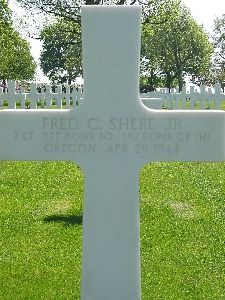
American War Cemetery Margraten
| Plot | Row | Grave |
|---|---|---|
| I | 8 | 17 |
Immediate family
-
Members
Fred C. Shere (father)
Marie J. Shere (mother)
Wilfred K. Shere (brother)
Barbara M. Shere (sister)
Katherine I (Price) Shere (wife)
Plane data
- Serial
number
41-28759 -
Data
Type: B-24H
Destination: Berlin, Germany
Mission: Bombing of the Friedrichstrasse railroad station
MACR: 4462
More information
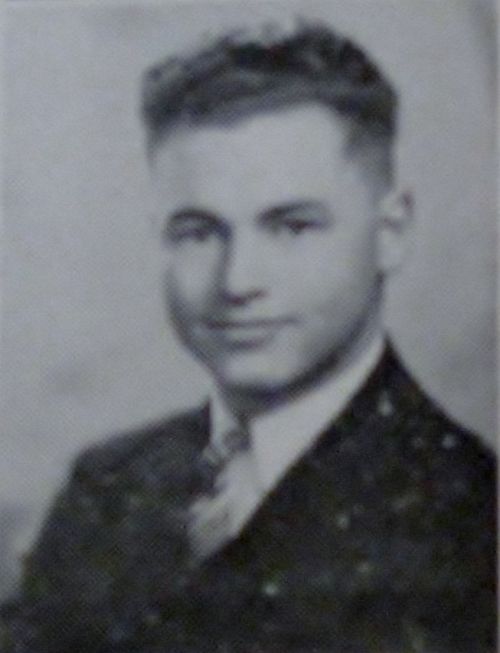
2nd Lt Fred C. Shere Jr. graduated from Ashland High School in 1940 and was a bookkeeping machine operator.He joined the Coast Artillery Corps of the National Guard at Fort Stevens on 16 September 1940, where he served for two years before transferring to the Army Air Force to become a pilot. He received his pilot wings and his commission as a second lieutenant on 13 June 1943 at the Stockton Army Airfield.
On 23 September 2015, the following article by Lynne Hasselman was written for the Ashland Daily Tidings:
Fred C. Shere, Jr., a wavy, dark-haired young man from Ashland High’s Class of 1940, was gifted with a ready smile, the ability to adapt quickly to new situations, and a mean tennis serve. After moving from Altadena, California, he swiftly settled into life in Ashland, playing on the tennis team and making extra money doing odd jobs on the farm. Three months after graduating, Fred enlisted with a coast artillery unit at Fort Stevens, where he served for two years before transferring to the Army Air Force to become a pilot.
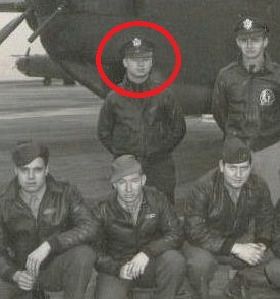
On June 13, 1943, at the Stockton Army Airfield, Fred received his pilot wings and his commission as a second lieutenant with his proud parents watching from the stands. He would be piloting a B-24 aircraft with the 577th Bombardment Squadron, 392nd Bombardment Group (Heavy).
In the early morning hours of April 29, 1944, Fred and his nine-man crew were briefed on their mission — a massive strike on the Friedrichstrasse Railroad Station, a major north-south, east-west traffic hub in the heart of Berlin. They would be one of three waves of more than 750 Allied aircraft and numerous fighter escorts charged with the same objective — from high in the sky, to hit a small target in the middle of a city of 4 million people without being shot down first.
The atmosphere in the briefing room was tense as the fliers turned in their personal items, collected their equipment, and suited up in protective clothing. Fred and his crew took off just after 8:30 AM from Wendling, England, flying through the clouds as part of the enormous formation of thundering silver aircraft taking over the sky. It soon became clear that an unpredicted, strong wind shift would take them all off schedule and off course. Flying at 24,000 feet with their oxygen masks on near Hanover, Germany, their wing was attacked by 60 to 80 enemy aircraft making double sorties.
Four planes from their bombardment group were hit and crashed, and two turned back with wounded airmen or extensive damage. As fate would have it, the escort planes, supposed to offer protection, were at the limits of their endurance and had to head back as well. Many replacements had mechanical problems and never found the B-24s to escort at all. Fred’s aircraft, only slightly damaged, flew on with the remainder of his scattered formation, open and vulnerable to further attacks.
Fred and his crew dropped their bombs on the target as planned, but their luck didn’t hold. On the return leg, about 45 minutes west of Berlin, they were spotted again by enemy aircraft. Three enemy fighters flew down through the formation, taking out the two Allied aircraft directly above. Fred’s aircraft, now with damaged engines, was losing altitude quickly. The amount of shrapnel pelting the plane was like hail on a tin roof, and through the hits, explosions, and smoke, Fred and his co-pilot struggled to fly on. Their crew was able to shoot down the first enemy fighter and cause the second one to abandon its attack. The third enemy aircraft, though, flew at them from below, causing the fatal damage.
Fred, his co-pilot, Corporal Milan Zeman, and his nose gunner, Staff Sergeant Fonzy Wilson of Elgin, Oregon, fought to control the aircraft so the remaining crew members could bail out. The last to exit, flight engineer Staff Sgt. Orlando Friesen said by the time he jumped, the plane was moments from crashing. There was a tremendous explosion as the aircraft hit the ground — the screech of metal, the tearing and twisting of steel, the smell of gas, clouds of dust and smoke rising in a sizzling conflagration. Fred, Cpl. Zelman and Staff Sgt. Wilson never made it out.
Excerpts from a letter sent to Fred’s family by Sgt. Joe Maloy, the ball turret gunner, was published in the Ashland Tidings. “Fred gave the order to bail out when the situation became hopeless, and we all believe his concern over our safety caused him to remain at his post too long,” he wrote. “His only thought was the welfare of the men who served under him. We are proud of him. I know that no one else would have kept the plane up as long as he did under the same conditions.”
Staff Sgt. Freisen added, “Fred kept the ship up until everyone else was out. He was not looking out for himself but for nine other men.”
“And so it was that the war in the air began,” wrote H.G. Wells. “Men rode upon the whirlwind that night and slew and fell like archangels. The sky rained heroes upon the astonished earth.”
Lt Shere was initially buried at the civilian cemetery of Achmer in grave #73.
Source of information: Raf Dyckmans, Peter Schouteten, Lynne Hasselman, www.B24.net, www.wwiimemorial.com, www.archives.gov, www.ancestry.com - 1940 Census, http://www.dailytidings.com/article/20150923/NEWS/150929955/-1/topic, New York, New York Birth Index
Photo source: Peter Schouteten, Lynne Hasselman, Michel Beckers/392nd Bomb Group