
Missing information?
Do you have any additional information you would like to share about a soldier?
Submit- Full
name
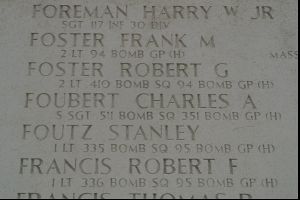
FOUBERT, Charles A - Date of
birth
26 October 1920 -
Age
23 -
Place of birth
Manhattan, New York County, New York City, New York -
Hometown
Manhattan, New York County, New York City, New York
Personal info
Military service
- Service
number
32515477 -
Rank
Staff Sergeant -
Function
Ball Turret Gunner -
Unit
511th Bombardment Squadron,
351st Bombardment Group, Heavy
-
Awards
Purple Heart,
Air Medal
Death
-
Status
Killed in Action - Date of
death
26 November 1943 - Place of
death
unknown
Grave
-
Cemetery
American War Cemetery Margraten - Walls of the Missing
Immediate family
-
Members
Charles Foubert (father)
Maria Foubert (mother)
Alicia Foubert (sister)
Elias Foubert (brother)
Vilma Foubert (sister)
Yolonda Foubert (sister)
Plane data
- Serial
number
42-39839 -
Data
Type: B-17F
Destination: Bremen, Germany
Mission: Bombing of the industrial area
MACR: -
More information
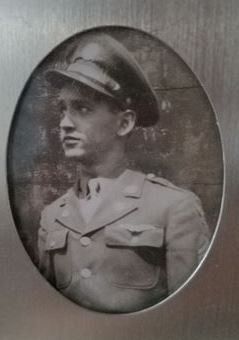
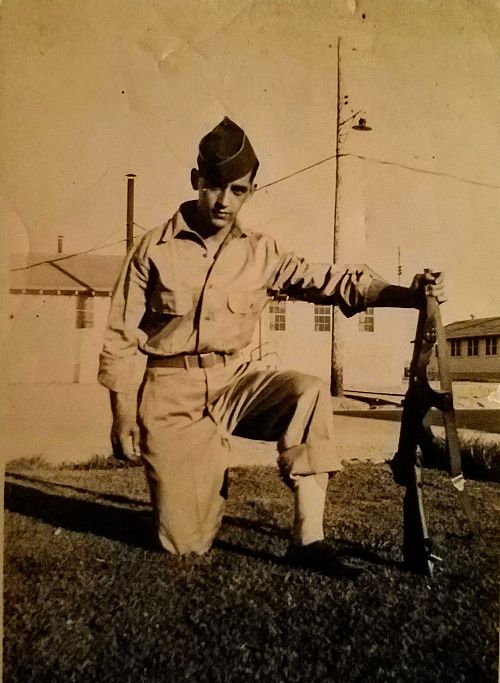
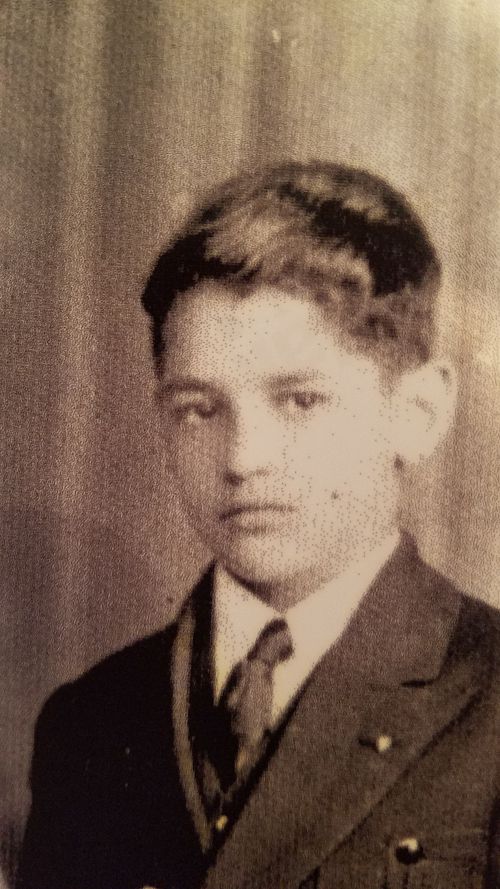
S/Sgt Charles A. Foubert was a stenographer and typist before he enlisted at Fort Jay, New York on 30 September 1942.Instead of bombing the primary target, this airplane bombed a target of opportunity: the Alte Mellum Island, Germany.
It had turned back after the #3 engine was hit by flak, causing a runaway prop which could not be feathered, and was jumped by a FW 190. The #3 gas tank and the #2 and #3 props were hit, as well as the nose, the cockpit, and radio room and the waist where fires started. The radio gunner had a foot shot off, the right waist gunner received a flesh wound in the left leg, and the ball turret oxygen system was knocked out. On the way back the crew started to dump ammunition because of gas shortage and discovered that the ball turret gunner, S/Sgt Foubert was missing. His parachute was in the ship and a pool of blood was in the turret. This aircraft reached Marham Airfield in England before running out of fuel and crash landed.
Statement of Lt. Dunnigan, the bombardier: “We had some engine trouble when we first hit altitude, but were able to keep up with the Group. We then hit two areas of heavy flak, which peppered the plane, but nobody was hit. However this flak caused further damage to two of our engines and we could no longer keep up with the Group. Lt. Lemley, the pilot asked for a heading to allow us to get as much protection as possible from other groups coming and going to the target. We pulled out of formation and headed back towards the North Sea, the way that we had come in. I salvoed the bombs on the Frisian Islands. We struggled along on the two engines and then the German fighters spotted us. They came up from below, protected by the poor visibility, and raked the ship with machine gun and cannon fire. The B-17 reared and bucked, but she kept right on flying on those two engines. As was the procedure, the crew checked in to me on the intercom. I then discovered that we had been badly hit in the radio room and that we had wounded. There was a large hole in the nose and the windblast was unbearable. The navigator went up to the flight deck and I took an oxygen bottle and went to check the wounded and assess the damage. The crawl from the nose to the radio room seemed endless. When I reached the radio room I was almost sick. It was shot full of holes and covered in T/Sgt. Barbiero’s blood. Sgt. Barbiero was standing up, still full of fight, but his lower leg had been shot off. He was in semi-shock, but had the presence of mind to apply a wire tourniquet around his thigh. S/Sgt. Anderson, the tail gunner, had been hit in the leg, and S/Sgt. Foubert had been blown out of the ball turret. Sgt. Barbiero would not let me give morphine; he wanted to know what was going on. It was just as well as at that time we did not know what we were going to do. He was a big guy and would have been a dead weight under the influence of drugs.
I went back to the flight deck where Lt. Lemley was doing a masterful job in keeping the ship flying. We discussed our chances and choices, eventually deciding to make for England. At that point we threw out everything that we did not need. After a couple of tough hours I assembled all the crew, with the exception of the pilots, in the radio room and we prepared for either a crash landing or ditching. The crew was all in position when I noticed the radio equipment on the wall opposite us. If this was torn loose on impact it could crush us. I stood up and was throwing the equipment out of the top hatch when we hit. I went flying and took an awful whack, but Sgt. Barbiero, in all his agony, reached up and pulled me back in the plane.
Lt. Lemley had to take the plane straight in as we had so little power. The plane plowed right through the roof of a farmhouse and tore up a lot of trees and ground before stopping. The farmer and his family came to our rescue and within five minutes an RAF rescue crew arrived from RAF Marham.”
Source of information: Raf Dyckmans, Luc van der Sterren, André Koch, Terry Hirsch, Carla Mans, www.abmc.gov, www.wwiimemorial.com, www.archives.gov, www.8thafhs.com, www.ancestry.com - 1925 New York State Census / 1940 Census, http://www.351st.org
Photo source: Peter Schouteten, www.findagrave.com - Staffin / Anonymous