
Missing information?
Do you have any additional information you would like to share about a soldier?
Submit- Full
name
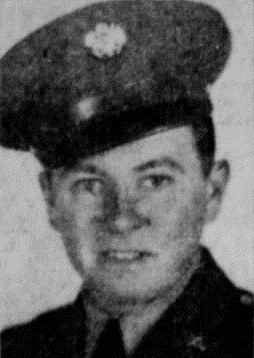
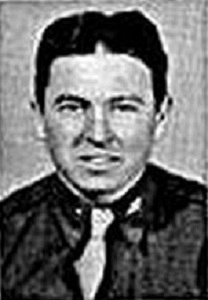
HORRIGAN, Richard William - Date of
birth
17 January 1921 -
Age
24 -
Place of birth
Chester, Hancock County, West Virginia -
Hometown
Chester, Hancock County, West Virginia -
Ethnicity
White
Personal info
Military service
- Service
number
O-832951 -
Rank
First Lieutenant -
Function
Pilot -
Unit
22nd Fighter Squadron,
36th Fighter Group
-
Awards
Distinguished Flying Cross,
Air Medal With 3 Oak Leaf Clusters
Death
-
Status
Killed in Action - Date of
death
19 April 1945 - Place of
death
The airfield of Alt Lönnewitz, Germany
Grave
-
Cemetery
American War Cemetery Henri-Chapelle -
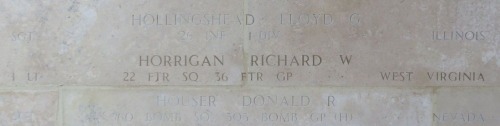
Tablets of the Missing
* This soldier has been accounted for. A rosette has been placed next to his name.
Immediate family
-
Members
Cornelius P. Horrigan (father)
Elizabeth Horrigan (mother)
Verna Horrigan (sister)
Gertrude Horrigan (sister)
Clarence Horrigan (brother)
Dorothy L. (Conklin) Horrigan (wife)
Richard W. Horrigan (son)
Plane data
- Serial
number
42-25956 -
Data
Type: P-47D
Destination: Alt Lönnewitz Airfield, Germany
Mission: Armed reconnaissance
MACR: 14383
More information
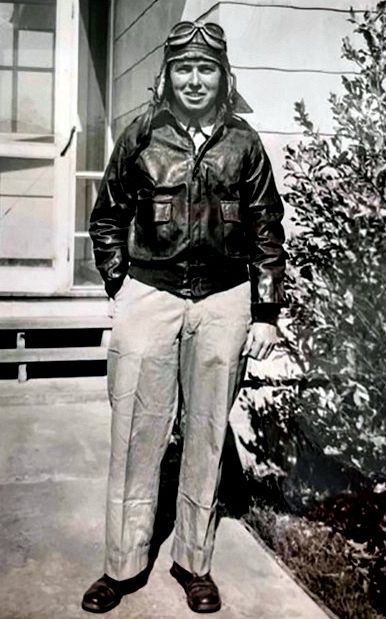
Richard Horrigan graduated from Chester High School in 1938.He joined the Air Corps in June 1942 and was commissioned in May 1944. He was sent overseas in December 1944.
1st Lt Horrigan joined several other pilots in strafing the airfield. His aircraft crashed during this action, likely due to anti-aircraft fire.
Horrigan’s wingman witnessed the crash, but because the airfield was behind enemy lines, Horrigan could not be recovered. Once sufficient evidence became available that he had not survived, a Report of Death for Horrigan was issued in November 1945.
The American Graves Registration Command (AGRC) was charged with recovering the remains of fallen service members in the European Theater following the war. Because Alt Lönnewitz Airfield was under strict control of Soviet forces, they could not investigate Horrigan’s crash. A German national was able to investigate on behalf of the AGRC in 1953, confirming through an eyewitness that human remains had been seen at the crash. However, they were never recovered and buried. Because the AGRC was not allowed to investigate the site, Horrigan was declared non-recoverable in October 1953.
In 2004, the Joint POW/MIA Accounting Command, a DPAA predecessor, in conjunction with third-party researchers, investigated the site. It was approved for excavation in 2006. However, important site and logistical information was missing, and a recovery team was not sent out.
In March 2017, a DPAA investigation team returned to the site and located what they believed was Horrigan’s aircraft. In June 2019, DPAA contracted History Flight, Inc., a nonprofit organization, to excavate the site. They recovered material evidence and possible remains that were initially transferred to the police in Herzberg, Germany, before being sent to the DPAA Laboratory at Offutt Air Force Base, Nebraska, for analysis in August 2019.
To identify Horrigan’s remains, scientists from DPAA used dental and anthropological analysis, as well as circumstantial and material evidence. Additionally, scientists from the Armed Forces Medical Examiner System used mitochondrial DNA (mtDNA), Y chromosome DNA (Y-STR), and autosomal DNA (auSTR) analysis.
Horrigan’s name is recorded on the Tablets of the Missing at the Henri-Chapelle American Cemetery. A rosette will be placed next to his name to indicate he has been accounted for.
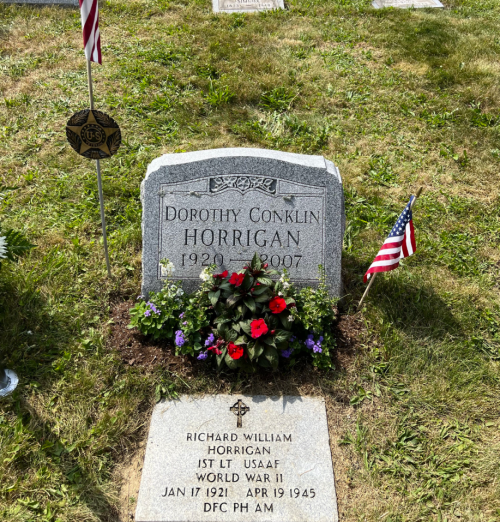
Horrigan is buried at the Locust Hill Cemetery in Chester, West Virginia.
Source of information: Peter Schouteten, Raf Dyckmans, Carla Mans, wwiimemorial, www.fold3.com - MACR, www.ancestry.com - 1930 Census, The Evening Review
Photo source: 36thFighterGroup.com, The Evening Review (East Liverpool, Ohio), www.findagrave.com - usafdo/GFM/Andy