
Missing information?
Do you have any additional information you would like to share about a soldier?
Submit- Full
name
ADAMS, Howard Frank - Date of
birth
8 June 1917 -
Age
25 -
Place of birth
Winchendon, Worcester County, Massachusetts -
Hometown
Rutland County, Vermont
Personal info
Military service
- Service
number
O-023946 -
Rank
Captain -
Function
Pilot -
Unit
66th Bombardment Squadron,
44th Bombardment Group, Heavy
-
Awards
Purple Heart,
Air Medal with Oak Leaf Cluster
Death
-
Status
Killed in Action - Date of
death
26 February 1943 - Place of
death
Willbroksmoor, Germany
Grave
-
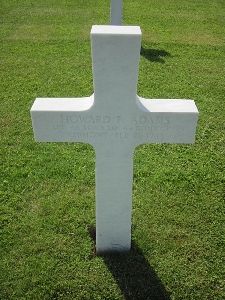
Cemetery
American War Cemetery Ardennes
| Plot | Row | Grave |
|---|---|---|
| B | 33 | 5 |
Immediate family
-
Members
Walter F. Adams (father)
Mary T. Adams (mother)
Merrit T. Adams (brother)
Kenneth W. Adams (brother)
Thomas R. Adams (brother)
Plane data
- Serial
number
41-23777 -
Data
Type: B-24D
Nickname: Maisie
Destination: Wilhelmshaven, Germany
Mission: Bombing of the U-boat yards
MACR: 16067
More information
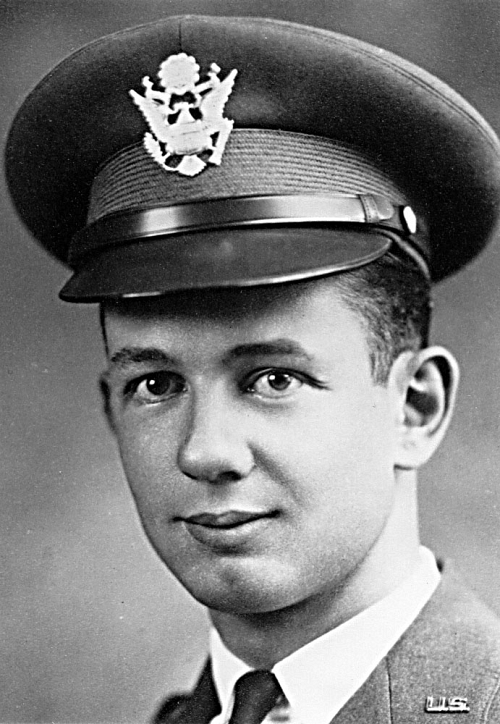
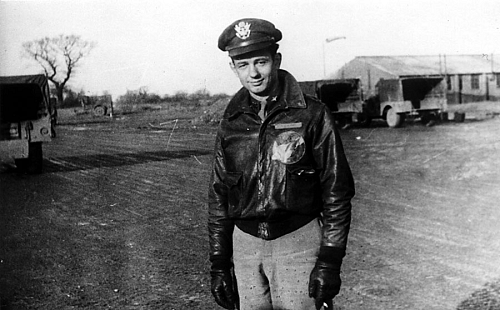
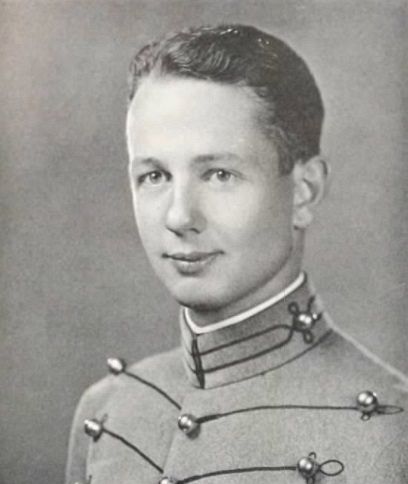
Howard Adams graduated from high school in 1935, after which he attended Columbia Preparatory School at Washington, D. C. Being unable to secure a Congressional appointment to West Point, he enlisted in a special one-year enlistment in the United States Army, to enable him to attend the Army Preparatory School at Fort Dix, New Jersey. Through competitive examinations, he won his appointment to West Point and entered the summer of 1937. At graduation in June 1941, he was commissioned a Second Lieutenant and assigned to the Air Corps at his own request. He began his primary training the following August at Jackson, Mississippi, and received his pilot's wings on 6 March 1942, at Turner Field, Albany, Georgia. He was given further training as pilot of a B-24 Liberator bomber at Shreveport, Louisiana, and Oklahoma City, Oklahoma.The aircraft was shot down by Lt Heinz Knoke in a Bf-109.
2nd Lt Wayne G. Gotke, navigator, gave this account: “Our ship was under constant fighter attack from the time that we reached the Island of Texel until we were shot down. We had fought off the planes with very minor damage until we were almost to Oldenburg, then all hell broke loose. I spent most of this time with position reports, trying to get shortcuts filled into the flight to allow us to gain and catch the rest of the formation. However, I am reasonably sure no one was injured up to this point except for Sgt Welsh, the belly gunner, who had passed out from lack of oxygen, and as far as I know he never regained his senses. When we were almost to Oldenburg, fighters hit us from all sides. Sgt Vogt, the engineer and top turret operator, shot the first fighter down, and I shot down the next down, however not until he had sent 20-mms. Into the nose and cockpit. Sgt Mifflin shot down the third from his waist gun position. At this point, my left gun jammed, and I know at least two planes made direct hits on nose and flight deck. Someone I’m sure was hurt on the flight deck, and I was hit twice in the nose of the ship operating a jammed gun. Engines #3 and #4 had been hit and were on fire. I believe fire spread to the wing tank and caused the ship to explode. I was working on my guns when all at once it seemed someone pushed me from behind and all went black. I woke up falling through space and I pulled my ripcord and no results, so I reached back and tore the back of my chute out. My last look at the altimeter showed 26,000 ft. and the Germans claim they saw my chute open at 5,000 ft."
Two crew members survived the crash. Nine men were killed. They were initially buried at the cemetery of Bad Zwischenahn, Germany.
Source of information: Peter Schouteten, Raf Dyckmans, 44th BGVA, Jim Hamilton
Photo source: Jac Engels, Michel Beckers, Jim Hamilton, www.findagrave.com - Jaap Vermeer