
Missing information?
Do you have any additional information you would like to share about a soldier?
Submit- Full
name
CHAMPLIN, John Ballinger - Date of
birth
26 October 1916 -
Age
26 -
Place of birth
Lawton, Comanche County, Oklahoma -
Hometown
Lawton, Comanche County, Oklahoma
Personal info
Military service
- Service
number
O-662246 -
Rank
First Lieutenant -
Function
Navigator/Bombardier -
Unit
450th Bombardment Squadron,
322nd Bombardment Group, Medium
-
Awards
Purple Heart,
Air Medal
Death
-
Status
Finding of Death - Date of
death
17 May 1943 - Place of
death
North Sea, 40 miles west of Zandvoort, the Netherlands
Grave
-
Cemetery
American War Cemetery Margraten - Walls of the Missing
Immediate family
-
Members
Roy F. Champlin (father)
Frances (Cobb) Champlin (mother)
Herbert H. Champlin (brother)
William P. Champlin (brother)
George A. Champlin (brother)
Nancy Champlin (sister)
Eleanor Champlin (sister)
Mary Camplin (sister)
Robert Champlin (brother)
Irene L. (Parsons) Champlin (wife)
Plane data
- Serial
number
41-18099 -
Data
Type: B-26B
Nickname: Lorraine/Gawja-Jerk II
Destination: IJmuiden, The Netherlands
Mission: Bombing of the power plant
More information
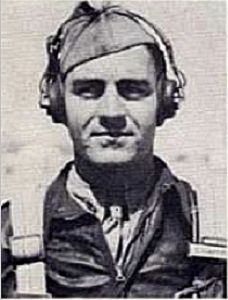
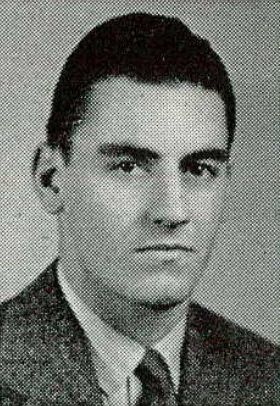
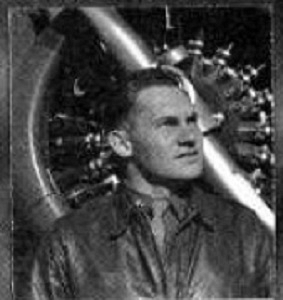
1st Lt John B. Champlin graduated from the University of Oklahoma in 1942 where he attended Law School.He joined the Air Corps of the Regular Army in Oklahoma City, Oklahoma on 11 November 1941.
The field order for the mission called for 12 aircraft, off which six would break off the formation and bomb the generation station and gas works at Haarlem, when they would reach the coast and the other six would continue their route to bomb the power plant of IJmuiden. However, only eleven planes were serviceable, because many were still under flak damage repair from the mission the day before. Every crew knew this mission would be one they would not survive. After taking off, they soon nosed over to 50 feet to get under the German radar. A little later, approximately 30 miles from the Dutch coast, one of the aircraft experienced electrical problems and headed back to England. When they turned, they climbed to 1,000 feet what would be considered common sense with a lame aircraft. However, by climbing, the aircraft placed itself within German radar coverage thus alerting German defenses. As the remaining aircraft approached the coast, several sea vessels appeared ahaed in the flight path. The formation changed course to avoid surface fire from these vessels, with the result they reached the coast at a point with one of the most heavily defended areas in the Netherlands. In very little time, five aircraft were shot down. The remaining aircraft believed they were close to there targets but they were still miles away. After 10 minutes without recognizing any landmarks, they thought they saw the Haarlem works, but it was a gas holder on the west side of Amsterdam. They dropped their bombs but all bombs fell short and caused no damage. Unknown to the crews, the heading taken from this target headed them directly for the heavily defended port area near IJmuiden. Also all remaining aircraft were shot down.
After completing his mission, the airplane was heading back to England when it was shot down at 12.30 hrs by Feldwebel Niederreichholz of II/JG1. It crash landed in the North Sea. Four men were killed, two crew members survived and were were picked up from their rubber dinghy on 22 May 1943 by the Royal Navy.

Source of information: Peter Schouteten, Terry Hirsch, www.wwiimemorial.com, www.archives.gov, www.fold3.com, www.ancestry.com, 1940 Census, http://gillinghambattleb26crash.weebly.com/ssgt-george-williams.html, www.findagrave.com, John Trapper, WWII Draft Card
Photo source: Peter Schouteten, Arie-Jan van Hees, Pilot Class Book 43-B, Douglas Army Air Field, Arizona, Bombardier Class Book 42-10, Midland Army Flying School, Texas, University of Oklahoma 1940