
Missing information?
Do you have any additional information you would like to share about a soldier?
Submit- Full
name
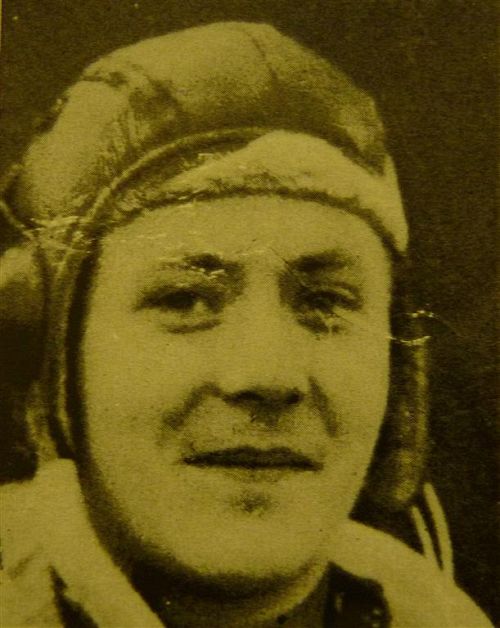
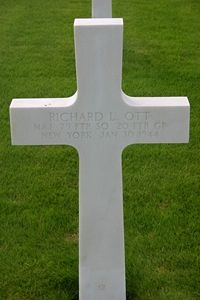
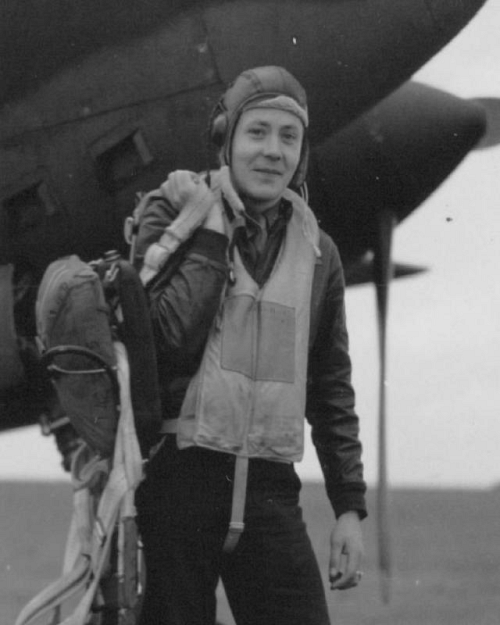
OTT, Richard Louis - Date of
birth
1918 -
Age
unknown - Place of
birth
New York -
Hometown
Brooklyn, Kings County, New York
Personal info
Military service
- Service
number
O-416336 -
Rank
Major -
Function
Pilot -
Unit
79th Fighter Squadron,
20th Fighter Group
-
Awards
Distinguished Flying Cross,
Purple Heart,
Air Medal with 2 Oak Leaf Clusters
Death
-
Status
Killed in Action - Date of
death
30 January 1944 - Place of
death
Between Minden and Osnabruck, Germany
Grave
-
Cemetery
American War Cemetery Ardennes
| Plot | Row | Grave |
|---|---|---|
| C | 22 | 12 |
Immediate family
-
Members
Louis Ott (father)
Lula K. Ott (mother)
Helen L. Ott (sister)
Plane data
- Serial
number
42-67516 -
Data
Type: P38J
Mission: Bomber Escort to Brunswick, Germany
MACR: 2118
More information
Statements of Lts Orr and Roark: "Major Ott destroyed the FW-190 and one Do-217. While attacking the Do 217, Major Ott's right engine was shot out, and the left engine damaged. He broke off the attack again, picked up his course with the other 3 weaving over him. Six more enemy aircraft were preparing to attack, so Major Ott went into the overcast at 5,000 ft, his left engine smoking at the time. He called out on the radio 'So long fellows' just as he disappeared."Maj Ott was the commanding officer of the 79th Fighter Squadron.
When Major Ott's body was discovered, his parachute had not been deployed. His body was found 2000 meters away from the crash site. His body was taken to the hospital in Holtwick before being buried in grave 12 of the hospital's cemetery.
A German eyewitness recently (October 2016) stated that Major Ott approached from a northeastern direction while flying in a cloudbase. He got the attention of a nearby Luftwaffe ground facility. This installation had the order to obtain airspace by ears and eyes. They reported what they noticed, and so German fighters appeared instantly. They gave Major Ott a few short bursts. The already damaged ship went down. The witness stated that he flew a broad turn, probably looking for a suitable spot for a forced landing. Ott soon bailed out. His P-38 crashed 1km west of the village of Holtwick, causing a crater of 10m x 6 x 2m. Ott was found dead 2 km north of the place of impact; his chute did not deploy. The witness saw him when he was moved to the hospital for examination. He lay on an even horse-wagon and he was covered with a blanket. The wind removed the blanket for a second and revealed a view of the deceased. The witness remembered that Ott had no visible injuries besides a few little cuts. His flying boots were torn off, and the witness remembered the bright wool socks Ott was wearing.
In October 2016, the crash site was discovered and will be examined by the WWII researcher Martin Kösters.
Source of information: Raf Dyckmans, Martin Kösters, Peter Schouteten, Terry Hirsch, http://www.20thfightergroup.com, www.fold3.com - MACR
Photo source: Peter Schouteten, http://www.20thfightergroup.com - Mike Murray