
Missing information?
Do you have any additional information you would like to share about a soldier?
Submit- Full
name
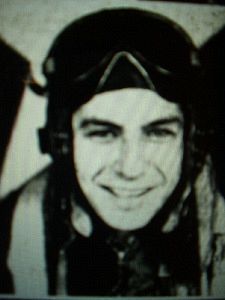
MONARCKY, Theodore - Date of
birth
17 April 1927 -
Age
17 -
Place of birth
West Virginia -
Hometown
Ashland, McDowell County, West Virginia
Personal info
Military service
- Service
number
35771995 -
Rank
Staff Sergeant -
Function
Ball Turret Gunner -
Unit
615th Bombardment Squadron,
401st Bombardment Group, Heavy
-
Awards
Purple Heart,
Air Medal with 3 Oak Leaf Clusters
Death
-
Status
Killed in Action - Date of
death
2 November 1944 - Place of
death
Near Wallendorf, 3 km east of Merseburg, Germany
Grave
-
Cemetery
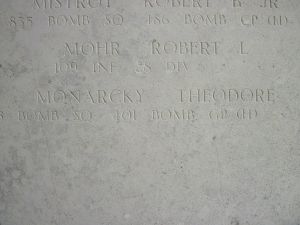
American War Cemetery Henri-Chapelle - Tablets of the Missing
Immediate family
-
Members
Joseph Monarcky (father)
Antonetta Monarcky (mother)
Albert Monarcky (brother)
Antonio G. Monarcky (brother)
Plane data
- Serial
number
43-38159 -
Data
Type: B-17 G
Nickname: Wolf Pack
Destination: Merseburg, Germany
Mission: Bombing of the Leuna synthetic oil refinery
MACR: 10159
More information
The airplane was hit by flak near the No. 3 engine. Ten seconds later, the aircraft went into a spin and dived out of control. Three parachutes were seen to come out of the aircraft. From the crew of nine, only the pilot, 1st Lt Herbert L. Oas, survived and was taken prisoner.According to German records, the killed crew members were buried at the cemetery of Wallendorf, except for 2nd Lt William M. Mencow, who was buried at the cemetery of Kriegsdorf (about 1 mile to the south).
After the war, the remains of five were never recovered by an American Search and Recovery unit: S/Sgt Theodore Monarcky, S/Sgt John J. Reardon, 2nd Lt William H. Green, and T/Sgt William C. Brereton, who are all remembered at the Tablets of the Missing at Henri-Chapelle. T/Sgt Byron Cook is remembered at the Tablets of the Missing at the Luxembourg American Military Cemetery.
An explanation could be that the section of the Wallendorf Cemetery where the subject deceased were interred received a direct bomb hit two days after they were interred, which caused a crater 28 to 30 feet wide and 10 to 12 feet deep. Investigation of this crater disclosed the fact that the remains found could not be segregated, making identification impossible.
Source of information: Raf Dyckmans, Peter Schouteten, WWIIMemorial.com, Missing Aircrew Report 10159, IDPF of William C. Brereton
Photo source: www.findagrave.com, Young American Patriots book