
Missing information?
Do you have any additional information you would like to share about a soldier?
Submit- Full
name
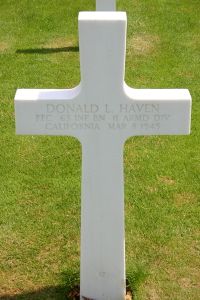
HAVEN, Donald Louis - Date of
birth
4 February 1925 -
Age
20 -
Place of birth
Orange County, California -
Hometown
Orange County, California
Personal info
Military service
- Service
number
39702719 -
Rank
Private First Class -
Function
unknown -
Unit
A Company,
63rd Armored Infantry Battalion,
11th Armored Division
-
Awards
Purple Heart
Death
-
Status
Died of Wounds - Date of
death
8 March 1945 - Place of
death
In the vicinity of Plaidt, Andernach, Germany
Grave
-
Cemetery
American War Cemetery Margraten
| Plot | Row | Grave |
|---|---|---|
| I | 17 | 17 |
Immediate family
-
Members
Robert A. Haven (father)
Vera M. (Clapp) Haven (mother)
Robert E. Haven (brother)
William E. Haven (brother)
More information
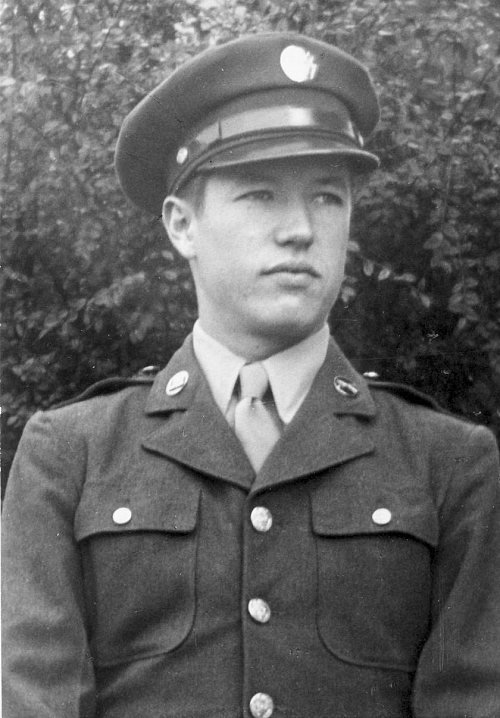
Pfc Donald L. Haven enlisted in Los Angeles, California on 10 August 1943.The following family history was written by his brother Robert, who passed away in 2017 and was provided to us by the Van Sint Feijth family, the adopters of Pfc Haven's grave at Margraten:
My Brother Don
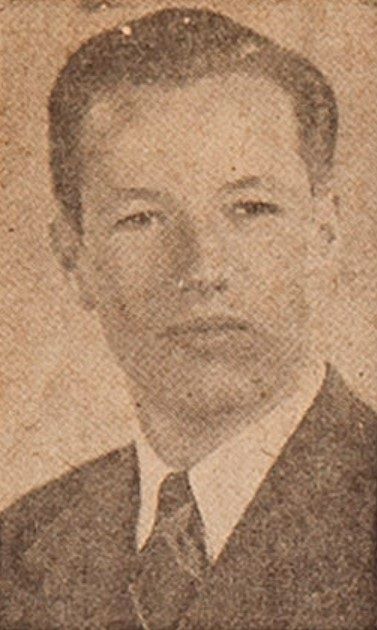
My brother, Donald Louis Haven, was three years younger than I. His middle name, Louis, was given to him in honor of our grandfather, Benjamin Louis Clapp. Don was a good student and he was always popular with the girls. He liked dancing and as a teenager when we lived in Santa Ana, California, he occasionally took the boat to Catalina Island to dance to the big bands that played at the casino. Don also had an aptitude for mechanical things. He bought his first used car while still in high school and kept it going based on his own abilities to repair it. I can still see him taking the carburetor completely apart and rebuilding it. During his senior year of high school, Don got a job with Western Union in downtown Santa Ana, delivering telegrams on his bicycle. Between runs, while the other boys loafed in back of the office, Don spent his time inside the office, learning to operate the teletype machines. Soon, he was hired as an operator and before long he also had the responsibility of handling the counter. Not long after that, Don was promoted to night manager. 138 Mother received a call one day from the Southern California Western Union manager in Los Angeles, asking for Don. Western Union wanted Don to travel to the office in Palm Springs to take care of some problems they were having there. The manager was quite surprised when Mother explained that Don was still in high school but his summer vacation would start in another week and Don would be available then. So he did go to Palm Springs on that break from school. He rented a room and within about six weeks he had the office straightened out and he returned home with a raise. When Don graduated from high school in 1943, World War II was in full swing. There was a program called the Army Specialized Training Program (ASTP). Don had taken and passed the tests to qualify for assignment to a university as an engineering major. Don enlisted and was sent to Santa Clara University in Santa Clara, California. I was able to visit him there once and caught him in his room doing his physics homework. I was so very proud of him. Don didn’t see how they could keep thousands of ASTP students out of combat much longer, so he took matters into his own hands and applied for pilot training. He was expecting his orders within days when just as he predicted, the ASTP program and virtually all military training programs were cancelled and Don, along with thousands of college-qualified kids throughout the U.S., were put into the 139 infantry as the D-Day invasion of Europe was approaching. Don’s orders sent him to Fort Benning, Georgia for basic training. While he was at Fort Benning, I was stationed at the Staff Weather School in Orlando, Florida. On a trip returning to Orange County Army Air Field, I was able to divert to Fort Benning with the hope of catching up with Don. I arrived by train on an early, frosty morning. Headquarters told me that Don’s company was somewhere out in the woods involved in an overnight training exercise. A captain gave me a lift in his jeep out to the company’s bivouac location and what a sight it was. There must have been a hundred pup tents with not a man in sight. Having been up all night, all of the men were happily sleeping. The captain shook tent after tent until finally he found Don. You can imagine Don’s surprise when he poked his head out and saw me! We had a great visit, including a field breakfast. It would be the last time I would see Don. After basic training, Don was sent to Camp Cooke, near San Luis Obispo, Ca. where he was assigned to Company A, 63rd Armored Infantry Battalion. I don’t remember where I got this story, possibly from a sergeant who contacted our parents after the war, but when the troops at Camp Cooke were loading up equipment on trains to get ready to go overseas, someone was having trouble getting a tank on to a flat-bed rail car. Don took over and did it himself, even though he had not been trained in a tank. That was Don — he was so 140 intelligent and so competent he could figure out anything. Don’s outfit spent several weeks in England getting ready for the invasion and while he was there, he met a girl. From what Don wrote me, it seemed to be fairly serious. Don’s battalion was part of the 11th Armored Division of General Patton’s 3rd Army. They landed in Europe in November, 1944. (Exact dates are available in the records of Company A, which I saved). Don’s letters, which I have kept, tell of the hell he must have gone through. One letter to me was written by the light of a cigarette in a cold, wet fox hole. It must have been the same sergeant I mentioned earlier that told me how at one point, when Don’s outfit was pulled back for a rest, Don took his camera and went back up on a hill in a combat area to get some pictures. While he was up there, a German attack took place and all the men near him were killed. In another letter Don sent me, he tells about how he and a friend were running together when his friend’s head was blown off. Don was only nineteen years old during this, and going through hell, while I was simply doing some interesting work and having fun as a new 2nd lieutenant going through pilot training and dating the girls. Don and I had become close brothers. I had written him about Betty and that we were planning to wed. Don wrote back, saying, “I want to be an uncle.” Betty and I married on 141 the twenty-second of December, 1944, so I’m certain I must have written to Don with that news. Patton’s 3rd Army arrived from the south to help end the Battle of the Bulge. Soon after that, Don’s unit, at the head of a long armored column, arrived at the outskirts of Kelberg, a small German farm town. Don operated a mortar and was on a half-track, which was the first vehicle in the column. The line had stopped and infantry men were being sent into the town to reconnoiter before entering. At that moment, a German 88mm artillery shell hit Don’s half-track. Several men were killed instantly, many were wounded. Don was mortally wounded on that day of 7 March, 1945 at 5:15pm. He was evacuated to the rear and he died the next day, just over a month after his 20th birthday on 4 February. Shortly afterward, his unit crossed the Rhine and in April, the war in Europe was over. Some years later I just happened to be at our parents’ home when a small package from the Army arrived in the mail. I intercepted the package before Mother and Dad even knew it had arrived because, as I thought, it contained Don’s personal belongings. In it was Don’s high school ring, smashed; his watch severely damaged and still blood stained; a little stub of a pencil; and several blood stained coins. I never let Mother and Dad know. 142 After the war my dad asked me what I thought about bringing Don home. At the time, I suggested that it would be better not to because I feared it would just renew my parents’ grief. Years later I regretted that choice and I’m sorry we didn’t have him brought home. Nineteen years after Don’s death, I was on temporary duty in Germany for a few weeks and I drove to Maargraten, Holland, where Don is buried in the American Memorial Cemetery. It’s a beautiful place and on Memorial Day, the local people cover the field with thousands of flowers. We could never find the town of Kelberg on a map, but while I was studying a road map to find my way to the American Memorial Cemetery from Rhine Main, I discovered that Kelberg was right on the way to the cemetery. I started out before dawn, driving north along the Rhine with the lights of the boats shimmering on the water, then west as the sun was coming up. It was a frosty morning in December when I arrived in Kelberg. There was just one man in sight, standing on a corner by a service station in the town square. I drove up to him and asked if he spoke English. He said he did, a little, so I asked him if he would join me for a breakfast or coffee at an inn across the street. We sat down at a table and I told him why I had come to Kelberg. He looked at me strangely and said, “March 7, 1945.” I asked him how he knew the date and he told me, “If your brother was killed here, I saw it happen.” I couldn’t believe my ears! This was nineteen years later! He asked me how I knew to contact him and I explained that I 143 didn’t, he just happened to be the only person I saw when I came into town. Heinz was the man’s name, and he took me to the exact spot where Don had been hit. His parents’ home was the first home on the edge of town. The armored column had just pulled up with Don’s half-track stopping just outside their driveway. When the Germans began shelling, he and his parents ran to their basement, which had a small window facing out to the street. He saw the 88mm shell hit the half track and saw several of the men fall to the side of the road, some killed and some wounded. According to the sergeant who contacted my parents, Don was mortally wounded, but asked for a cigarette. The wounded were evacuated to the rear and that was the extent of information we had. Several years after my trip to Kelberg, Betty and I were traveling in Europe and we stopped in Kelberg, met with Heinz and stayed overnight there in a small inn. After 65 years, I still miss Don and think of how he would have been such an enjoyable member of our family and a wonderful uncle to my children.
Source of information: Raf Dyckmans, Peter Schouteten, Carla Mans, www.wwiimemorial.com, www.archives.gov - WWII Enlistment Record, www.ancestry.com - U.S., Headstone and Interment Record / 1930 Census / 1940 Census / California Birth Index, www.11tharmoreddivision.com
Photo source: Peter Schouteten, Bob Haven (nephew), Santa Ana Register