
Missing information?
Do you have any additional information you would like to share about a soldier?
Submit- Full
name
SHAW, John Portz Jr - Date of
birth
1 February 1918 -
Age
26 -
Place of birth
Camden, Camden County, New Jersey -
Hometown
Haddon Heights, Camden County, New Jersey
Personal info
Military service
- Service
number
O-551161 -
Rank
Second Lieutenant -
Function
Co-Pilot -
Unit
850th Bombardment Squadron,
801st Bombardment Group, Heavy
-
Awards
Purple Heart,
Air Medal
Death
-
Status
Killed in Action - Date of
death
18 July 1944 - Place of
death
Between Marigny-l'Eglise and Mazignien-Coutôlles, France
Grave
-
Cemetery
American War Cemetery Ardennes
| Plot | Row | Grave |
|---|---|---|
| B | 34 | 57 |
Immediate family
-
Members
John P. Shaw Sr. (father)
Marie E. Shaw (mother)
Albert J. Shaw (brother)
Plane data
- Serial
number
42-51187 -
Data
Type: B-24H
Destination: Marigny-l'Eglise, France
Mission: Supply drop
MACR: 7551
More information
2nd Lt John P. Shaw Jr. attended Haddon Heights High School and worked in a machine shop.He joined the Air Corps of the Army of the United States on 14 January 1942 in New York City, New York. Lt Shaw first served with the cavalry at Fort Riley, Kansas before qualifying for flight duty. He trained at Santa Ana, California, and was commissioned as a Second Lieutenant on 2 November 1943. In December of 1943 he was stationed at Mountain Home, Idaho.
Nicknamed the Carpetbaggers, this unit for the most part did not fly traditional bombing missions, instead it served as the first Special Operations group of the United States Army Air Force. At the peak of operations, in July of 1944, this group cooperated to fly "Spies and Supplies" into Western Europe on an almost nightly basis, bad weather excepted. Millions of propaganda leaflets, thousands of guns, tons of supplies of all kinds, and hundreds of individual personnel, the specially trained "Jedburgh" teams, the larger O.S.S. "Operational Groups", were all flown into occupied Europe by the flyers of the Group on forays unprotected by fighters or any other air cover in specially prepared B-24 bombers. Additionally, a small number of C-47 flights were flown which took in supplies and brought out agents and evaders from Allied forces.
The mission for that night was to drop supplies on dropzone Peinture near Marigny-l'Eglise for the resistance fighters of the Maquis group Camille. This was one of two parachute drops expected in the area, the second being by a Halifax II, #LL364 from 138 RAF Squadron, who would drop supplies for a SAS unit operating in the area.
The B-24 turned over a nearby village to line up its run to the dropzone, while the Halifax turned towards his radio beacon and crossed over the route of the B-24. the two aircraft collided in mid-air at about 01:00 hrs near Marigny-l'Eglise.
The entire crew of both airplanes, eight in the B-24 and seven in the Halifax, were killed. The bodies of the deceased crew members remained untouched at the crash site for ten days because the Germans would not give permission to bury them, until the mayor decided to bury them without their consent.
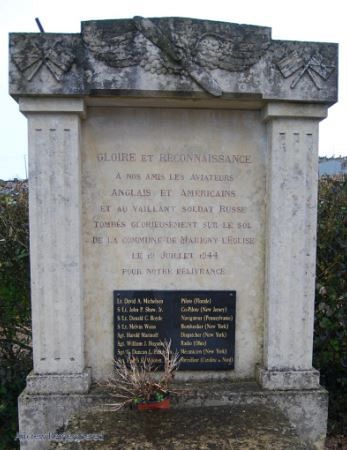
A memorial at Marigny-l'Eglise is dedicated to the airmen.
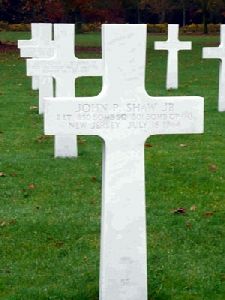
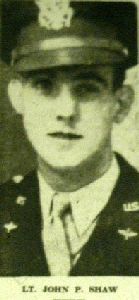
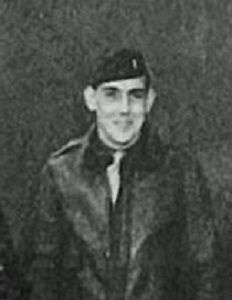
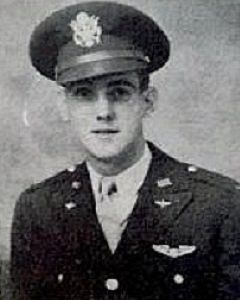
Source of information: Raf Dyckmans, Terry Hirsch, www.dvrbs.com, www.fold3.com - MACR 7551, www.ancestry.com - 1920 Census US / Pennsylvania Church and Town Records 1708-1985/ WWII Draft Card
Photo source: www.dvrbs.com, Arie-Jan van Hees, Pilot Class Book 43-J, Marfa, Texas, www.findagrave.com