
Missing information?
Do you have any additional information you would like to share about a soldier?
Submit- Full
name
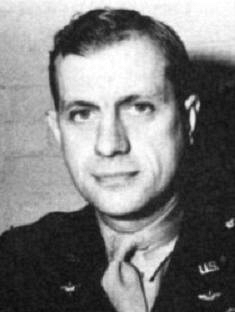
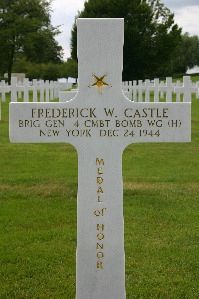
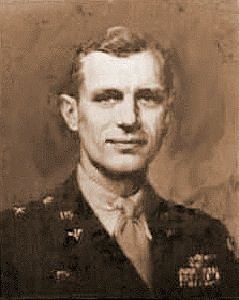
CASTLE, Frederick Walker - Date of
birth
14 October 1908 -
Age
36 -
Place of birth
Fort McKinley, Manila, Philippine Islands -
Hometown
Mountain Lakes, Morris County, New Jersey
Personal info
Military service
- Service
number
O-319375 -
Rank
Brigadier General -
Function
Co-Pilot -
Unit
4th Combat Bomber Wing, Heavy
-
Awards
Medal of Honor,
Silver Star,
Legion of Merit,
Distinguished Flying Cross with 3 Oak Leaf Clusters,
Air Medal with 3 Oak Leaf Clusters,
French Croix de Guerre,
Russia's Order of Kutuzov
Death
-
Status
Killed in Action - Date of
death
24 December 1944 - Place of
death
Close to the Castle Englebertmont
Rotheux-Rimière, Belgium
Grave
-
Cemetery
American War Cemetery Henri-Chapelle
| Plot | Row | Grave |
|---|---|---|
| D | 13 | 53 |
Immediate family
-
Members
Benjamin F. Castle (father)
Winifred (Walker) Castle (mother)
Winifred (Milikin) Castle (sister)
Hancey (Glidden) Castle (sister)
Plane data
- Serial
number
44-8444 -
Data
Type: B-17G
Nickname: Treble Four
Destination: Babenhausen, Germany
Mission: Bombing of the airfield
MACR: 11552
More information
Frederick Castle joined the New Jersey National Guard in 1924, entering the U.S. Military Academy at West Point two years later and graduated with the Class of 1930. He was the son of Colonel Benjamin Frederick Castle who had graduated from the Academy in 1907 and retired in 1919 as a Colonel.He left the Army in 1934 to work for Allied Chemical and Dye Corporation, remaining a member of the Army Reserve. He was recalled to active duty as a captain in 1942 and assigned to organizing bases and supply depots for the new Eighth Air Force in England. He was promoted to Brigadier General on 20 November 1944.
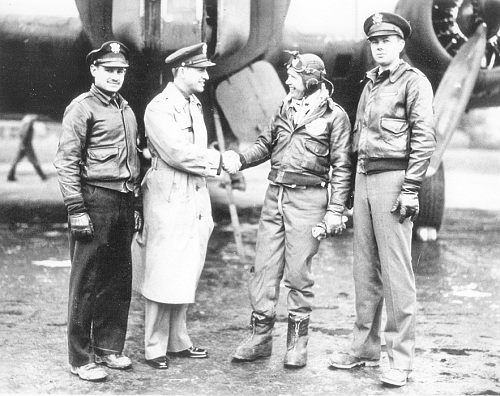
Brig Gen Castle commanded the 94th Bomber Group before he was appointed commander of the 3rd Air Division.
The citation of his Silver Star Medal stated:
"The President of the United States of America, authorized by Act of Congress July 9, 1918, takes pleasure in presenting the Silver Star to Colonel (Air Corps) Frederick Walker Castle (ASN: 0-319375), United States Army Air Forces, for gallantry in action while serving as Combat Leader with the EIGHTH Air Force on a bombing mission over Germany, 28 July 1943. Colonel Castle directed a Heavy Bombardment Wing from his position in the leading airplane of the formation. Under his inspiring leadership, a highly important and heavily defended military objective was successfully bombed. The courage, skill and brilliant leadership displayed by Colonel Castle on this occasion reflect the highest credit upon himself and the Armed Forces of the United States."
The citation of his Legion of Merit stated:
"The President of the United States of America, authorized by Act of Congress July 9, 1918, takes pleasure in presenting the Legion of Merit to Brigadier General Frederick Walker Castle (ASN: 0-319375), United States Army Air Forces, for exceptionally meritorious conduct in the performance of outstanding services to the Government of the United States while serving with the EIGHTH Air Force during World War II. The singularly distinctive accomplishments of General Castle and his dedicated contributions in the service of his country reflect the highest credit upon himself and the United States Army Air Forces."
The citation of his first Distinguished Flying Cross stated:
"The President of the United States of America, authorized by Act of Congress, July 2, 1926, takes pleasure in presenting the Distinguished Flying Cross to Colonel (Air Corps) Frederick Walker Castle (ASN: 0-319375), United States Army Air Forces, for extraordinary achievement while participating in aerial flight while serving as Commanding Officer of a B-17 Group of the EIGHTH Air Force on a bombardment mission over Germany, 17 August 1943. In spite of intense anti-aircraft fire and extremely heavy fighter opposition, the formation made the deepest penetration thus far into Germany, bombed a target of vital importance with highly successful results and continued on to bases in another theater. During one of the greatest aerial battles of the war, lasting over two hours, approximately one hundred and fifty enemy aircraft were destroyed. The courage, skill and determination displayed by Colonel Castle on this occasion reflect the highest credit upon himself and the Armed Forces of the United States."
The citation of his second Distinguished Flying Cross stated:
"The President of the United States of America, authorized by Act of Congress, July 2, 1926, takes pleasure in presenting a Bronze Oak Leaf Cluster in lieu of a Second Award of the Distinguished Flying Cross to Colonel (Air Corps) Frederick Walker Castle (ASN: 0-319375), United States Army Air Forces, for extraordinary achievement while participating in aerial flight while leading a Heavy Bombardment Division of Flying Fortresses on a mission over Germany, 16 December 1943. Colonel Castle directed the attack from his position in the leading aircraft. In spite of repeated assaults by hostile fighters and extremely adverse weather conditions, he maintained a tightly-knit formation and reached the assigned target on schedule. Though subjected to heavy, accurate anti-aircraft fire, Colonel Castle led his units directly over the objective and wrought great destruction on important enemy installations. The high degree of success attained is attributable to the courage and superb leadership of Colonel Castle. His actions on this occasion reflect highest credit upon himself and the Armed Forces of the United States."
The citation of his third Distinguished Flying Cross stated:
"The President of the United States of America, authorized by Act of Congress, July 2, 1926, takes pleasure in presenting a Second Bronze Oak Leaf Cluster in lieu of a Third Award of the Distinguished Flying Cross to Colonel (Air Corps) Frederick Walker Castle (ASN: 0-319375), United States Army Air Forces, for extraordinary achievement, while leading a Combat Wing of B-17 airplanes on a bombardment mission over Germany, 25 February 1944. In spite of adverse weather conditions over England, he skillfully assembled his units in their proper positions in the formation exactly on schedule. Flying as Command Pilot in the leading aircraft, Colonel Castle maneuvered the Wing through determined enemy opposition to reach the assigned target. Though subjected to intense and accurate anti-aircraft fire, which damaged his plane, he directed a bombing run that wrought vast devastation on an important enemy installation. The courage, sound judgment and skillful leadership displayed by Colonel Castle were largely responsible for the high degree of success attained by the Wing. His actions on this occasion reflect highest credit upon himself and the Armed Forces of the United States."
The citation of his fourth Distinguished Flying Cross stated:
"The President of the United States of America, authorized by Act of Congress, July 2, 1926, takes pleasure in presenting a Third Bronze Oak Leaf Cluster in lieu of a Fourth Award of the Distinguished Flying Cross to Colonel (Air Corps) Frederick Walker Castle (ASN: 0-319375), United States Army Air Forces, for extraordinary achievement, while serving as Pilot of a B-17 airplane of the EIGHTH Air Force on twenty-five bombardment missions over enemy occupied Continental Europe. Displaying great courage and skill, Colonel Castle has materially aided in the success of each of the twenty-five missions and his actions are an inspiring example for his fellow flyers. The courage, coolness and skill displayed by Colonel Castle on all these occasions reflect the highest credit upon himself and the Armed Forces of the United States."
The citation of his Medal of Honor stated:
"The President of the United States of America, in the name of Congress, takes pride in presenting the Medal of Honor (Posthumously) to Brigadier General (Air Corps) Frederick Walker Castle (ASN: 0-319375), United States Army Air Forces, for conspicuous gallantry and intrepidity in action above and beyond the call of duty while serving with the 487th Bombardment Group (H), 4th Bombardment Wing, Eighth Air Force. Brigadier General Castle was air commander and leader of more than 2,000 heavy bombers in a strike against German airfields on 24 December 1944. En route to the target, the failure of one engine forced him to relinquish his place at the head of the formation. In order not to endanger friendly troops on the ground below, he refused to jettison his bombs to gain speed maneuverability. His lagging, unescorted aircraft became the target of numerous enemy fighters which ripped the left wing with cannon shells, set the oxygen system afire, and wounded two members of the crew. Repeated attacks started fires in two engines, leaving the Flying Fortress in imminent danger of exploding. Realizing the hopelessness of the situation, the bail-out order was given. Without regard for his personal safety he gallantly remained alone at the controls to afford all other crewmembers an opportunity to escape. Still another attack exploded gasoline tanks in the right wing, and the bomber plunged earthward, carrying General Castle to his death. His intrepidity and willing sacrifice of his life to save members of the crew were in keeping with the highest traditions of the military service."
The mission fell fifteen minutes behind schedule because of problems assembling the massive force, and the 487th missed its rendezvous with escorting P-51 fighters because the fighters were late in arriving due to the weather. The lead bomber also experienced an intermittent problem with one of its four engines and was attacked by German ME-109 fighters while still over Allied-held territory in Belgium.
The plane fell away from the formation almost immediately and Brig Gen Castle instructed the deputy commander by radio to take over the lead. The B-17 struggled with control and moved some distance away from the protection of the bomber force, where it was again attacked. The pilots attempted to return to the bomber column but a third attack set both engines on the right wing on fire. Castle ordered the bomber abandoned but it spun into a dive. The pilots recovered from the dive and seven of the nine crewmen parachuted. The pilot was observed in the nose of the airplane hooking on his parachute, with Castle still at the controls, when the fuel tank in the burning right wing exploded, putting the B-17 into a spin from which it did not recover.
Of the ten crew members, six survived the crash.
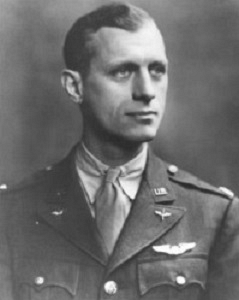
Source of information: Peter Schouteten, Terry Hirsch, United States Military Academy at West Point, www.absoluteastronomy.com/topics/Frederick_W_castle,
Photo source: Peter Schouteten, www.findagrave.com, http://www.armyairforces.com/