
Missing information?
Do you have any additional information you would like to share about a soldier?
Submit- Full
name
CARR, William Call - Date of
birth
1911 -
Age
unknown -
Place of birth
California -
Hometown
Sebastopol, Sonoma County, California
Personal info
Military service
- Service
number
O-312155 -
Rank
Major -
Function
unknown -
Unit
1058th Engineer Construction and Repair Group
-
Awards
Legion of Merit
Death
-
Status
Killed in Action - Date of
death
17 March 1945 - Place of
death
Ludendorff Bridge, Remagen, Germany
Grave
-
Cemetery
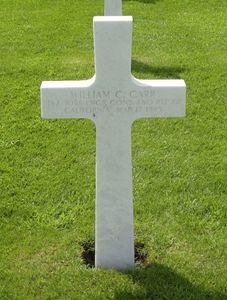
American War Cemetery Henri-Chapelle
| Plot | Row | Grave |
|---|---|---|
| A | 8 | 50 |
Immediate family
-
Members
William H. Carr (father)
Laura (Call) Carr (mother)
Ross N. Carr (brother)
Laura C. Carr (sister)
More information
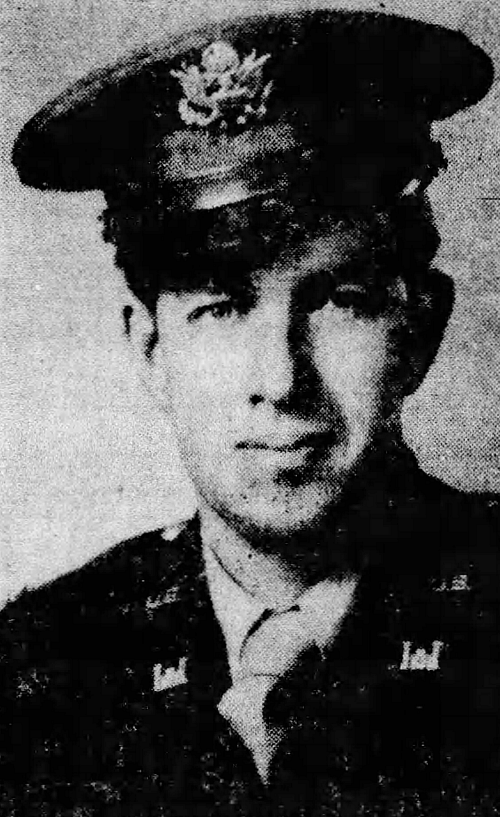
Maj Carr volunteered for the Army of the United States in 1940. He was first stationed in Louisiana, where his supervision of barracks construction won him the admiration of high ranking officers and earned him the rank of Captain in the engineering corps. Later, in the Great Lakes country, his exploits drew more comment from high military authorities. Consistent with his practices as a young contractor in Sebastopol and the Russian River area, he did what many declared was “impossible.” He moved huge bridges, built army bases in record time and performed many other outstanding engineering feats.After landing in England two years prior, where he wrote his mother he was doing “much the same kind of work,” his efficiency and resourcefulness was rewarded by an advance to the rank of major.
It was in France and Germany where the most spectacular of all engineering problems confronted his branch of the service - removing demolition charges from the strategic Ludendorff bridge and, after it was demolished by German forces, quickly providing emergency spans.
The engineers of the 276th Engineer Combat Battalion and the 1058th Port Construction and Repair Detachment lost 7 killed, 18 missing (whose bodies were never recovered), and 3 who subsequently died of wounds - a total of 28 who gave up their lives; 63 others working on the Ludendorf Bridge were injured when thrown into the icy waters of the Rhine by sudden collapse.
He was awarded the Legion of Merit. The citation cited: Major William C. Carr, corps of engineers, United States Army, for exceptionally meritorious conduct in the performance of outstanding services, while serving with the 1058th Engineer Port Construction and Repair, from March 10, 1945 to March 17, 1945. Major Carr was placed in charge of repair work being done in an attempt to save the Ludendorff bridge at Remagen, Germany, from collapse as the result of enemy demolitions. Working under intermittent artillery fire and aerial bombardment, he distinguished himself by his technical understanding of the task, his unfailing devotion to duty and his inspiring leadership. Major Carr's heroic efforts to save a bridge which was to the utmost military significance remain among the classic examples of distinguished endeavor recorded among the fighting forces of the United States.
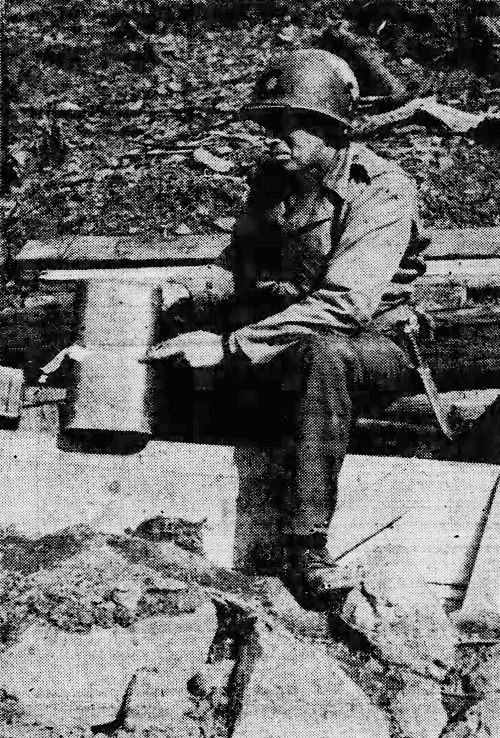
In the last photo, Major William C. Carr is pictured examining a German demolition charge which he removed from the bottom of one pier on the famous Ludendorff bridge near Remagen, Germany, prior to 17 March, when he was killed in action. Had this charge gone off, it would set off 1,500 pounds of explosives.
His cousin, Randall R. Eckert, was killed in action on 5 March 1945 and is buried at the American War Cemetery Margraten in The Netherlands.
Source of information: Peter Schouteten, www.wwiimemorial.com, www.basher82.nl, www.newspapers.com - The Press Democrat, www.ancestry.com - Headstone and Interment Record / 1930 Census
Photo source: www.findagrave.com, Des Philippet, www.newspapers.com - The Press Democrat