
Missing information?
Do you have any additional information you would like to share about a soldier?
Submit- Full
name
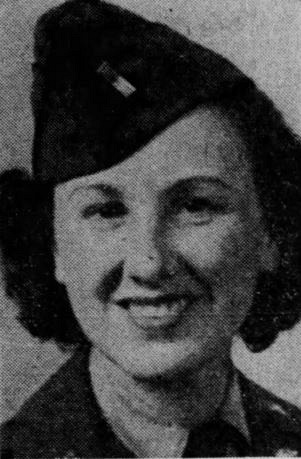
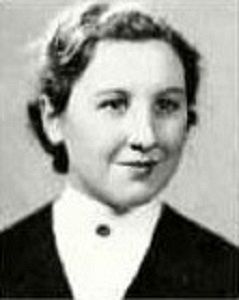
GASVODA, Christine Annette - Date of
birth
1915 -
Age
unknown - Place of
birth
Michigan -
Hometown
Detroit, Wayne County, Michigan
Personal info
Military service
- Service
number
N-731360 -
Rank
First Lieutenant -
Function
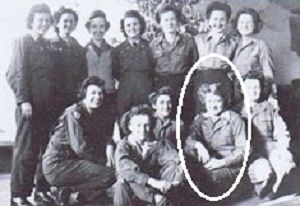
Flight Nurse -
Unit
817th Medical Air Evacuation Squadron
-
Awards
Purple Heart,
Air Medal
Death
-
Status
Killed in Action - Date of
death
13 April 1945 - Place of
death
Rehberg mountain
In the vicinity of Altenbeken, Germany
Grave
-
Cemetery
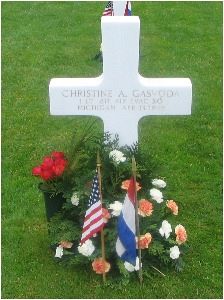
American War Cemetery Margraten
| Plot | Row | Grave |
|---|---|---|
| F | 19 | 4 |
Immediate family
-
Members
Louis Gasvoda (father)
Jera (Kunzik) Gasvoda (mother)
Maria Gasvoda (baby-sister)
Agnes T. Gasvoda (sister)
Plane data
- Serial
number
43-15086 -
Data
Type: C-47A
Nickname: Hi
Destination: Hildesheim, Germany
Mission: Evacuation of wounded
MACR: 14726
Biography
http://www.youtube.com/watch?v=sqMEGSLcd74More information
"I was leading the flight of fourteen planes, on the resupply and evacuation mission, Wing no. 225, in which plane 43-15086, piloted by 1st Lt R.D. Burchfiel, participated. We flew on the disignated course and made our turn at Paderborn and headed for field R-16, located at Hildesheim.Statement from Capt Harry C. Heal, Pilot and Flight Leader: "After flying about five minutes we ran into bad weather and I ordered my flight to make a 180 degree left turn and go back to Paderborn. The formation, at that time was in trail. After we landed at Paderborn, the formation waited about two and one half hours but no message was received from the missing ship."
Statement from the sole survivor of the crew, Radio Operator Joseph L. Boucher: "Lt. Randolph D. Burchfiel was leading a three-plane element in a flight of 18 planes that took off at 0715, headed for field R-16 at Hildersheim to deliver a load of gasoline and pick up evacuation patients on the return trip. The weather was fair up to the Rhine River.
After the river was crossed we started to run into an overcast that got very dense, making it necessary to fly on instruments. I was standing in the rear of the plane as is standard operating procedure on flights east of the Rhine on orders from Major Mudrow. The radio operator in the lead plane looks out the astrodome while those flying on the wings in elements look out the door. This duty is exchanged periodically with the crew chief.
We saw one opening in the fog and it looked like we had plenty of altitude. Then the fog closed in again. About fifteen seconds later trees started to slap the wings and I knew we were going to crash [12 miles northeast of Paderborn, Germany].
I lost consciousness and when I came to the plane was upside down and I was lying about 5 or 7 feet away from it. It was not burning. My watch had stopped at 1021, thereby fixing the time of the crash. I got up and looked for the rest of the crew, Lt. Burchfiel, O-685237, Lt. Homer T. Hornberger, O-674269, F/O John E. Henwood, T-124229, and T/Sgt. Ernest A. Burke, 31 317 911.
I found, to the best of my knowledge that they were all dead. I was unable to tell about the crew chief Ernest A. Burke as he was under the plane and I was unable to see him. The nurse that we had aboard, 1st Lt. Christine A. Gasvoda, N-731360, was also dead.
There was a path that led to a small town (name unknown) that I followed and was able to find a German doctor. He was reluctant to go with me, so I forced him at the point of my pistol to accompany me. He brought with him two assistants and a homemade litter. On our way back I fired shots in the air with my pistol to attract attention. A signal corps column heard my shots and found me, so we all went back to the plane. One of the enlisted men spoke German.
The doctor examined all the crew and pronounced them dead. We wrapped them in parachutes and put them in a clearing about 30 yards from the plane. A M/Sgt. from the signal company went through their pockets and took all their personal belongings and put them in a parachute which I took with me.
They took me to an aid station at Nieheim and an American doctor gave me treatment. He said that I had a broken arm and put it in a sling. He sent an MP up to guard the wreck and said he would send up some medics to bring back the bodies.
From there I was sent to the 19th Evacuation Hospital for treatment and was there for four days. It was at this hospital that the doctor told me that my arm was not broken but only strained. They also took x-rays of my back to be sure that it was okay. The x-rays all showed negative. On the fourth day I got a ride to the field of the 435th TCG.
On the evening of the 15th I telephoned my squadron and they came on the 17th to return me to my base."
Four crew members and a passenger, Flight Nurse 1st Lt Christine A. Gasvoda, were killed.
A short film of her life can be seen here: http://www.youtube.com/watch?v=sqMEGSLcd74
Source of information: Raf Dyckmans, Peter Schouteten, Terry Hirsch, www.fold3.com - MACR 14726, www.ancestry.com - U.S., Headstone and Interment Records for U.S. Military Cemeteries on Foreign Soil / 1940 Census / Michigan Death and Burials Index / Michigan Mariage Records
Photo source: Peter Schouteten, www.findagrave.com - Peter Jakobs, Detroit Free Press - 10 May 1945